
Just launched! 2022 Fellowship in Design
Production and delivery of food, goods, machines and services and even energy to users generates waste. Highly variable, but at each stage of production through to delivery and consumption waste occurs despite our efforts to make best use of byproducts through recycling. We are familiar with the ubiquitous nature of packaging and we are used to discarding products that are obsolete, in need of repair (too difficult) or just because we desire new.
In the building industry for instance, there is waste from inefficient use of materials and over specification unnecessarily consumes resources. Difficulties in re-using many materials following demolition or stripping out for refurbishment leads to large volumes of waste. Furthermore, there is risk of downcycling of materials through recycling (rather than direct reuse), often more energy intensive and potentially wasteful– so designing for reuse at end of life to minimise risk of downcycling is also important.
Waste material has its own previously embodied carbon and excessive waste may well require yet more waste in order to be processed for re-use or even to be discarded safely. We waste in order to save both effort and money; being diligent with the recycling bins is not enough to counter the unseen production of waste.
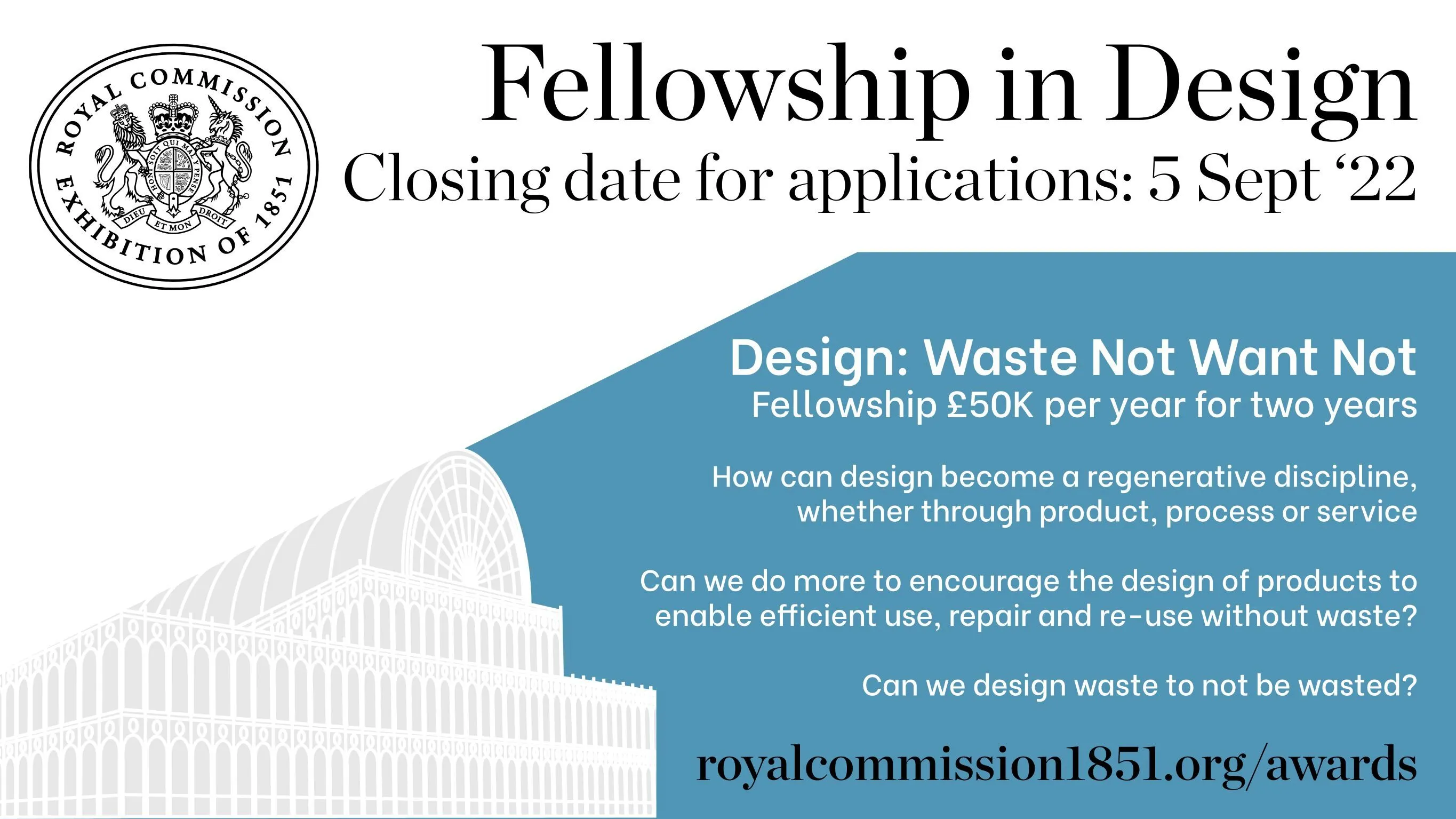
Theory related to the circular economy illustrates that much is and can be done to re-use, repair, refurbish, re-cycle or even up-cycle or just to extract energy, but can we do more to encourage the design of products to enable efficient use, repair and re-use without waste? Can we design waste to not be wasted? Can we learn from other systems like nature?
This year’s fellowship for design is looking for how design can become a regenerative discipline, whether through product, process or service.
More information and how to apply here